How Waves Change the Shore
25 Jul, 2026
Level: Intermediate
Total vocabularies: 120
Minutes to read: 2
Topic: The Ocean
You can click on the Play game and explore button below to learn more interesting knowledge.
Waves never stop moving, and neither does the shore .
Every day, waves push and pull sand, rocks, and water along the coastline .
This constant movement slowly changes the shape of beaches and cliffs .
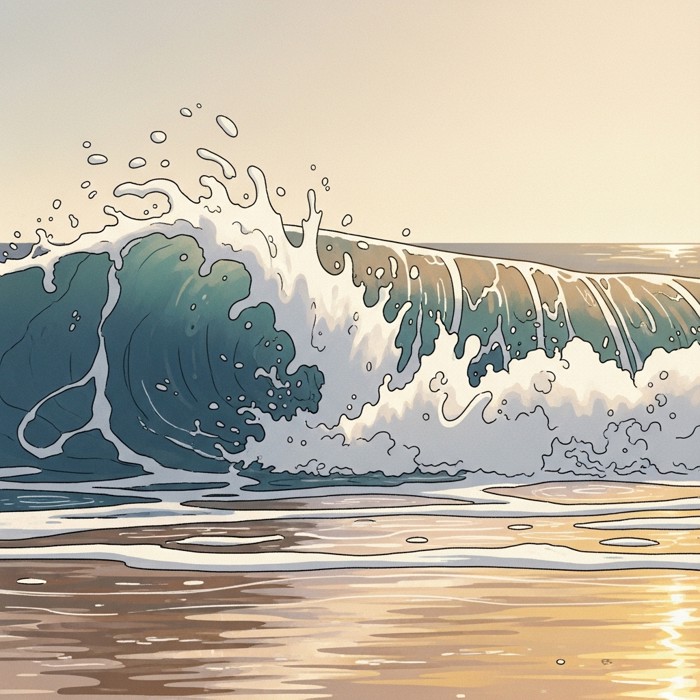
A close-up slow-motion shot of a large wave breaking on the shore, its white crest exploding with force as it releases energy onto wet sand
When a wave crashes onto the beach, it carries energy from the ocean.
That energy breaks rocks apart and moves sand from one place to another.
Over time, this process wears away coastal cliffs in a process called erosion .
Erosion can remove large amounts of rock and sand from a shoreline each year.
At the same time, waves also deposit sand in new areas.
This deposited sand builds up beaches, sandbars , and barrier islands.
Strong storms bring much bigger waves that can reshape a beach in just one night.
After a storm, a beach may look completely different from how it looked before.
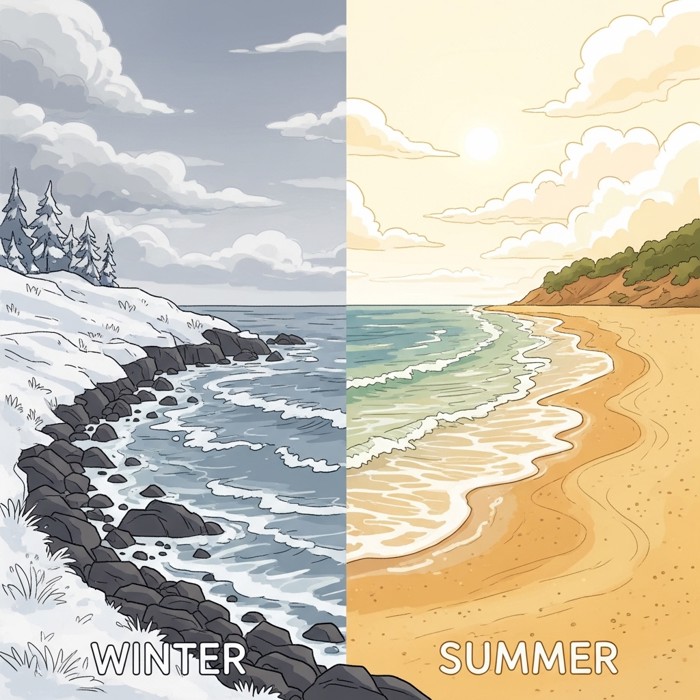
A comparison of the same beach in winter and summer side by side — the winter side shows a narrow, rocky shoreline stripped of sand, while the summer side shows a wide, golden sandy beach
Seasonal changes also affect the shore , as winter waves tend to be stronger and remove more sand.
In summer, calmer waves return sand to the beach and rebuild it.
These natural processes have shaped coastlines for millions of years.
The shore is always changing, shaped by the endless power of the sea.